hypnopompic inspiration

The science of sleep has continued to gain attention and over the past couple of decades the field of sleep medicine has experienced a boom. According to American Sleep Association, there are two forms of sleep related hallucinations: hypnogogic and hypnopompic. Some researchers, however, note that the term hallucination is unfitting because hallucinations only occur in the full waking state. Firstly, hypnogogia, is the term used to describe the state one experiences just before sleep. In this state, one may experience hallucinations and sleep paralysis. Secondly, hypnopompia, is the term used to describe the state one experiences upon waking. Sleep paralysis is common during this period, along with perceived complex visual imagery, and increased dream recall.

These sleep-related states can serve creative types well. My own experiences have resulted in decision making, speech writing, and artistic creativity. Others have discovered solutions to complex problems and have even composed musical pieces. When we pay attention and attend to the lived experience of these states, possibilities become endless.

Allow me to share a recent hypnopompic episode. As I was awakening one morning, I saw a strong and fairly clear image that puzzled me. There was a simple wooden wall or plank, with a bright red heart (like a paper valentine’s day-like cut-out heart) floating near the top-left side. To the right was a vertical column of silvery milagros or ex-voto. 649932E1-5FF1-4A6B-B0A3-2EA9E29E6F48Unfortunately, I could not hold on to the exact ones, but I’m certain that they were all body parts. There were at least four, but likely many more. I brought the image to my dream group and processed its many possible meanings. Still, the image stuck with me and I began to draw it, then paint it (I now have plans to construct it in the near future). Through the artistic process my relationship to the meaning behind the raw imagery developed. This style of dreamwork can evolve over a long period of time leading to greater insight and awareness of one’s soul journey. So much of this space remains private, but I am beginning to reveal more and more in time. This image, in its many forms will be on public display in two art exhibitions this spring and summer. I’m excited to share more of my inner work with others and discuss how sleep related states have created meaning in the lives of my community.

Shamans and practitioners of traditional ways do not necessarily label or compartmentalize the human experience the way the West does. No matter which labels (hallucinations, etc.) Western science applies, sleep related states have a long history of supporting spiritual growth and development in many areas (business, career, marriage, creativity). With a pen and paper by the bedside, and a set intention, so much can be unleashed.

Be well,

Kim

To order my book, Extraordinary Dreams, click here.
 

dreaming in recovery

While working as a trauma therapist at a non-profit agency for substance abuse recovery, I meet all kinds of women. The clientele are highly diverse, yet they come together in their recovery journey. Whether in an individual or a group therapy session, the topic of dreaming often emerges even though I do not advertise my experience as a dreamworker or dream researcher. Dreams in early and mid-stages of recovery surface and are shared. The question often asked is “why now?” and “what does this mean?”

“Dreams belong to the dreamer,” I state, “so you are the one to determine that.” My offer to share some prominent theories, in order to generate ideas, is met with approval. One perspective of dreaming is that dreams come in service of evolution. They act as a protective evolutionary factor. In this case, if a woman is striving to stay clean (and recover from long-term drug abuse), a drug-of-choice dream might remind her of her purpose and this most pressing issue.

In the dream, sometimes the dreamer simply looks at, or holds, a bag containing the drug-of-choice; other times she prepares to consume the illicit drug, but awakens before doing so. And even other times, dreamers use the drug while in the dream state .Perhaps these three examples represent levels or stages of recovery integration. Or, perhaps they exist simply to encourage the dreamer to progress in some way.

In the first example, some of these dreamers have spoken about a feeling of mastery or pride in that they could be so close to such a dangerously tempting substance, yet not act impulsively or have any desire to do so. In the second example, dreamers have reported feeling worried about their dream activities (e.g. chopping a line; preparing a syringe), only to become increasingly vigilant in their recovery work. The third and final example can leave the dreamer with much confusion and fear. One woman reported smoking crack cocaine in a dream, and while slowing waking up (aka hypnopompic state), she touched her face, perceiving it as thinner and sunken in. This perception led her heart to race and body to jolt out of bed in fear. The dream, she said, upon reflection, supported her recovery by scaring her out of thoughts of using. The cravings dissipated for some time and she made several statements about her commitment to her recovery.

Substance abuse is like a slow death. It is, essentially, self-harm and the illicit drug is the weapon. For those living with addiction, the drug-of-choice is extremely powerful – powerful enough to hijack, sabotage, and rob a person of their own life. If dreams do serve evolution, then a dream centered around the relationship and power dynamic between the drug and the dreamer, may support relapse prevention or prepare the dreamer for what could come.

Addiction is a chronic disease. It can cause disability and premature death, but it can be managed and people do recover. The resources listed below can offer help and provide information, however, they are just a starting place.

http://www.asam.org

http://www.na.org

http://www.smartrecovery.org

http://www.womenforsobriety.org/beta2/

a pathway to lucid dreaming

From an extraordinary dream to a hypnotic state, chimera made a meaningful presence in my life. Numerous others have seen significant images of people, animals, and more, in dreams, hypnosis, and other non-ordinary states of consciousness. Anyone can wait for a particular image to reappear, although at times, one is moved to act and discover more sooner than later. While there are a variety of techniques and practices that exist to propel such a journey, lucid dreaming is one such pathway to regain access.

In his preface to his first book, Lucid Dreaming: Gateway to the Inner Self, Robert Waggoner (2009) writes that lucid dreaming is “the ability to become consciously aware of dreaming while in the dream state.” Stephen LaBerge, has researched this phenomenon for decades. In one of his books, Lucid Dreaming: A Concise Guide to Awakening in Your Dreams and in Your Life, he states that “lucid dreamers can consciously influence the outcome of their dreams” (2004, p. 3).

These books, among several others, offer tips and techniques for lucid dreaming success. In my experience, a daily concentration meditation practice has been very helpful. Whether it is counting each breath, walking slowly and mindfully with intention, focusing on an object (candle flame, flower, glass of water), or vocalizing a mantra, the act of focused attention itself brings about benefits. In addition, attending to the present moment through intentional awareness, whether you are showering or doing the dishes, enhances faculties needed for awareness in the dream state.

If you are new to this, start small. Consistent shorter periods of time are better than skipping days or nothing at all, or inconsistently practicing for longer periods. Try for five minutes a day, then 10 the following week and so on. An hour a day is wonderful, and can be split into a morning and evening practice (30 minutes each). In addition to gaining enhanced experiences in dreamtime, your physiology will thank you too, as such practices are known to relieve stress and bring a sense of peace and calmness.

If you want to learn more about an image or experience you’ve had in an ordinary, typical dream state, dreaming with awareness, or lucidly, can allow for such conscious engagement. If you’ve had such an experience, and are moved to share it, I’d love to hear from you.

Happy dreaming,

Kim

why “conscious chimera?”

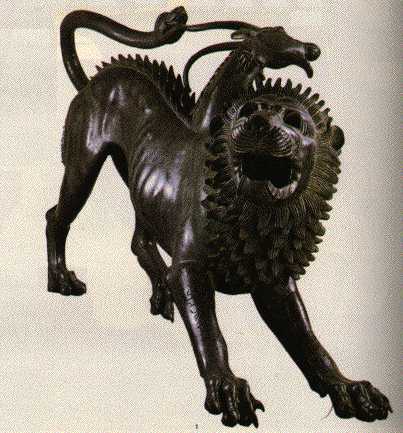
Why “conscious chimera?” There is so much in a name. Chimera appeared to me many years ago, in dream. At that time, chimera presented itself as a small statue, or figurine, able to fit in my open palms. In the dream, this image, this mythological creature, felt significant. I came upon it in a dream basement. Upon returning to an ordinary wakening state, I researched its meanings and pondered its significance. I was somewhat familiar with the history of chimera, but why would it be with me in this way, at this time?

chimera

Chimera did not return for what felt like ages, even while I revisited its meaning and history from time to time. A few years ago, though, I was invited to attend a monthly dream group, and it was there that I shared the dream. The dream group’s members, after a process of analysis, offered meaningful insights and possibilities for such a dream. That evening, I left the group refreshed and with purpose, although still somewhat bewildered. And still, I continued to hold chimera in my thoughts and daydreams. I had hoped to reconnect.

During a presentation and workshop at the 2015 IASD conference, interested attendees were guided into a state of relaxation – a light hypnotic state – and furthermore, welcomed to imagine an image from a dream that needed greater clarity or insight. Naturally, chimera emerged. This time, chimera was no figurine, but full-grown, and even better – fully alive! Having had years of experience with hypnosis, I guided myself to go deeper and felt very relaxed and comfortable, so much so, in fact, that I imagined becoming chimera itself. Our essence merged, you could say. At that moment, we leapt into the air and ran at high speeds through the landscape. My conscious awareness shifted from being the chimera to riding the chimera – both were just fine. It felt good, and safe, and I felt well-cared for by chimera.

As the experiential portion of the workshop came to close, I emerged from this non-ordinary state of consciousness with a great appreciation for this creature. No longer mythological, and no longer separate, but instead, a seemingly real guide and companion that would remind me of my inner power and my path, and fill me with gratitude.

Here’s to the journey…

Kim