journeys into the imaginal

Do you ever think about how different our lives would be if we were born several hundred years ago? That’s a lot to think about, I know. How about specifically with regard to health and healing? What did people do before modern medicine, psychiatry, and wellness coaching? Who or what did they seek out in order to get well? Historically, healers across the globe have gone by many names. In this short article, I will focus on a particular type of healer, a practitioner of traditional ways, sometimes referred to as ‘shaman.’ For shamans, healing is equivalent to transformation, not simply focusing on curing an ailment (Kalweit, 1992).

Shamanism has an extensive history (evidence suggests going back tens of thousands of years) on every continent of the world. The word ‘shaman’ comes from the language of the Tungus people of Siberia (Harner, 1980, 1990), although, the word ‘shaman’ however is not typically used by shaman’s themselves (it can be considered bad luck) and traditionally, it is not a role one volunteers for (Ingerman, 2004, 2008). Basically, one does not chose shamanism, it chooses you. Shaman’s, appointed by their communities, act in service of those communities on many levels. Shaman’s are also skilled dreamers. Restoring balance (physically, mentally, emotionally, spiritually) is among the many duties performed. Duties can take place in dream consciousness or others states of consciousness, such as a shamanic state of consciousness.

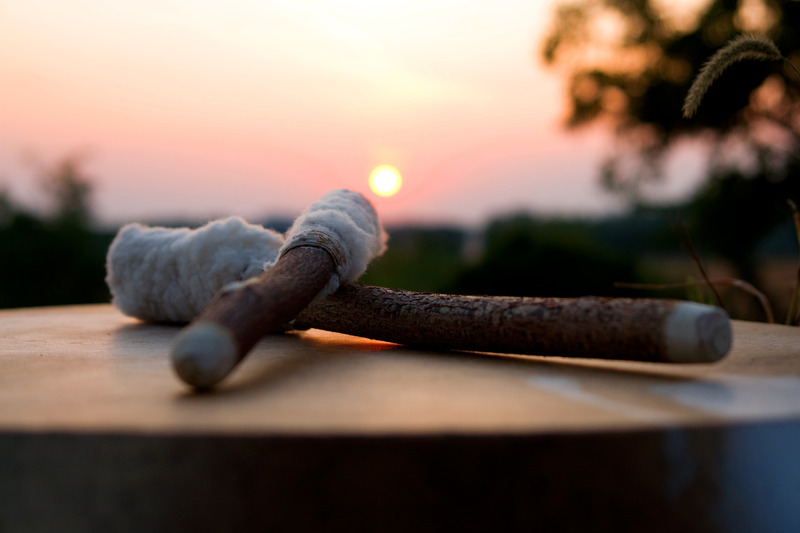
Whether we call them shamanic journeys, imaginal journeys, ecstatic journeys, or something else, humans across time and place have known how to travel to, entering and exiting, otherworldly realms, or unseen worlds. This is done in order to gain access to a wide variety of information, ask for spiritual help and support, and heal themselves, their families and communities. These unseen realms have been referred to by different names across the globe, such as “Other World” in Celtic Shamanism and the “Dreamtime” in Australian Aboriginal tradition (Ingerman, 2004, 2008). These ‘other’ locales can be divided into three major territories: Lower, Middle, and Upper Worlds. Each ‘world’ has something different to reveal to us or teach us. The ‘laws’ we have come to know and expect, do not apply any longer. The community-appointed shaman is considered an expert in navigating these realms. Diverse communities across the world have used various means to assist the shaman in altering consciousness in order to begin the journey. Most commonly repetitious, monotonous sounds, such as those created by a rattle or drum, or chanting, are used.
One can experience a shamanic journey without being appointed shaman, and many do, myself included. As one who uses hypnosis and various types of meditation and breathwork for my own benefit (and offers these services to my clients), it is clear that there are similarities and differences among these trance-like ‘altered states.’ An ability to concentrate is key! Learning the skills to enter a shamanic state of consciousness with intent and purpose, and return to the ordinary state of consciousness can be taught by experienced practitioners and skills can be honed by dedicated students. After all, these are natural conditions. That being said, the worlds entered through a shamanic state of consciousness are not playgrounds and there is a lot to learn before jumping onboard.

Restoring wholeness, coming into balance and harmony with the universe, as well as our full creative potential can be supported through shamanic journeying, as the practice supports us moving forward in our own soul’s journey (Ingerman, 1991).

If this topic interests you, and you would like to learn more, I recommend reading the books written by Michael Harner, Holger Kalweit, Sandra Ingerman, and Robert Moss, for starters. If you want additional references and resources, contact me.

As we approach Samhain, Dia de Los Muertos, All Saint’s Day and All Soul’s Day, I wish peace and harmony to you and to all of your family members and ancestors, whether embodied or otherwise.

~Dr. Kim
welcoming deceased loved ones in hypnosis

Earlier, I wrote about significant images, whether animal or human (or beyond), that may appear in dream or hypnosis. While separated by time, chimera was a significant image that appeared to me in both states. However, chimera was far from the only one.

While deceased loved ones may appear to us in dreams or visions, they may also appear when in hypnosis. Around the time I became certified in hypnotherapy in 2005, I had a beautiful experience. Another student of hypnosis was working with me that day and after the brief induction, I felt relaxed and comfortable. I hadn’t dropped deeply, but I definitely felt the enjoyable effects of the hypnotic state.

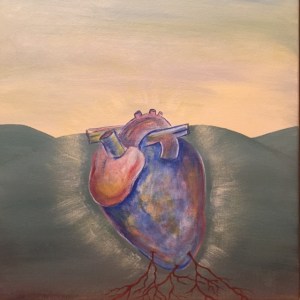
For this experience, I chose to make contact with a heaviness I had been carrying in my heart region for some time. I wanted to understand it and transform it into something positive and light. After exploring it in a light hypnotic state, the hypnotherapist asked my deep inner mind to reveal an image, sensation, or message that could assist me and my heart. To my surprise, my dear Uncle Joe appeared, along with his boat – I was so happy to see him! In my core, I knew everything would be okay and relaxed into the experience. Carefully and gently, the heaviness was removed from my heart center and placed in his boat before he drove it out into the middle of the lake where it was released.

IMG_1873This memory has stayed with me for over 10 years now. But it didn’t end there. Before being guided back to my ordinary state of consciousness, I thanked my uncle for his help and then attended to the empty space that was left after the removal. In hypnosis, I imagined soft golden and white light filling the space and unifying my center. With gratitude, I opened my eyes and thanked the hypnotherapist as well.
While one can ask for assistance from a particular person, spirit, power object, or animal, it is also possible that one just appears. This was the case for me that day. Sometimes we can be surprised! We can trust that whatever appears to us, in whatever way, is just right…just what we need at that moment.

In loving memory,

Kim

a pathway to lucid dreaming

From an extraordinary dream to a hypnotic state, chimera made a meaningful presence in my life. Numerous others have seen significant images of people, animals, and more, in dreams, hypnosis, and other non-ordinary states of consciousness. Anyone can wait for a particular image to reappear, although at times, one is moved to act and discover more sooner than later. While there are a variety of techniques and practices that exist to propel such a journey, lucid dreaming is one such pathway to regain access.

In his preface to his first book, Lucid Dreaming: Gateway to the Inner Self, Robert Waggoner (2009) writes that lucid dreaming is “the ability to become consciously aware of dreaming while in the dream state.” Stephen LaBerge, has researched this phenomenon for decades. In one of his books, Lucid Dreaming: A Concise Guide to Awakening in Your Dreams and in Your Life, he states that “lucid dreamers can consciously influence the outcome of their dreams” (2004, p. 3).

These books, among several others, offer tips and techniques for lucid dreaming success. In my experience, a daily concentration meditation practice has been very helpful. Whether it is counting each breath, walking slowly and mindfully with intention, focusing on an object (candle flame, flower, glass of water), or vocalizing a mantra, the act of focused attention itself brings about benefits. In addition, attending to the present moment through intentional awareness, whether you are showering or doing the dishes, enhances faculties needed for awareness in the dream state.

If you are new to this, start small. Consistent shorter periods of time are better than skipping days or nothing at all, or inconsistently practicing for longer periods. Try for five minutes a day, then 10 the following week and so on. An hour a day is wonderful, and can be split into a morning and evening practice (30 minutes each). In addition to gaining enhanced experiences in dreamtime, your physiology will thank you too, as such practices are known to relieve stress and bring a sense of peace and calmness.

If you want to learn more about an image or experience you’ve had in an ordinary, typical dream state, dreaming with awareness, or lucidly, can allow for such conscious engagement. If you’ve had such an experience, and are moved to share it, I’d love to hear from you.

Happy dreaming,

Kim

why “conscious chimera?”

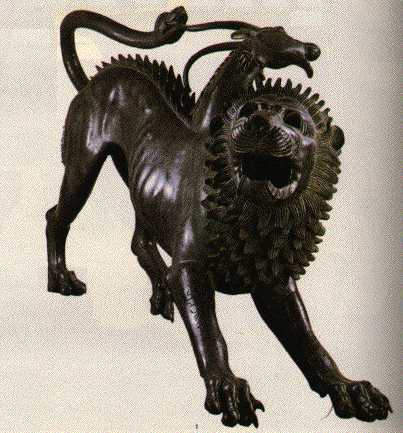
Why “conscious chimera?” There is so much in a name. Chimera appeared to me many years ago, in dream. At that time, chimera presented itself as a small statue, or figurine, able to fit in my open palms. In the dream, this image, this mythological creature, felt significant. I came upon it in a dream basement. Upon returning to an ordinary wakening state, I researched its meanings and pondered its significance. I was somewhat familiar with the history of chimera, but why would it be with me in this way, at this time?

chimera

Chimera did not return for what felt like ages, even while I revisited its meaning and history from time to time. A few years ago, though, I was invited to attend a monthly dream group, and it was there that I shared the dream. The dream group’s members, after a process of analysis, offered meaningful insights and possibilities for such a dream. That evening, I left the group refreshed and with purpose, although still somewhat bewildered. And still, I continued to hold chimera in my thoughts and daydreams. I had hoped to reconnect.

During a presentation and workshop at the 2015 IASD conference, interested attendees were guided into a state of relaxation – a light hypnotic state – and furthermore, welcomed to imagine an image from a dream that needed greater clarity or insight. Naturally, chimera emerged. This time, chimera was no figurine, but full-grown, and even better – fully alive! Having had years of experience with hypnosis, I guided myself to go deeper and felt very relaxed and comfortable, so much so, in fact, that I imagined becoming chimera itself. Our essence merged, you could say. At that moment, we leapt into the air and ran at high speeds through the landscape. My conscious awareness shifted from being the chimera to riding the chimera – both were just fine. It felt good, and safe, and I felt well-cared for by chimera.

As the experiential portion of the workshop came to close, I emerged from this non-ordinary state of consciousness with a great appreciation for this creature. No longer mythological, and no longer separate, but instead, a seemingly real guide and companion that would remind me of my inner power and my path, and fill me with gratitude.

Here’s to the journey…

Kim