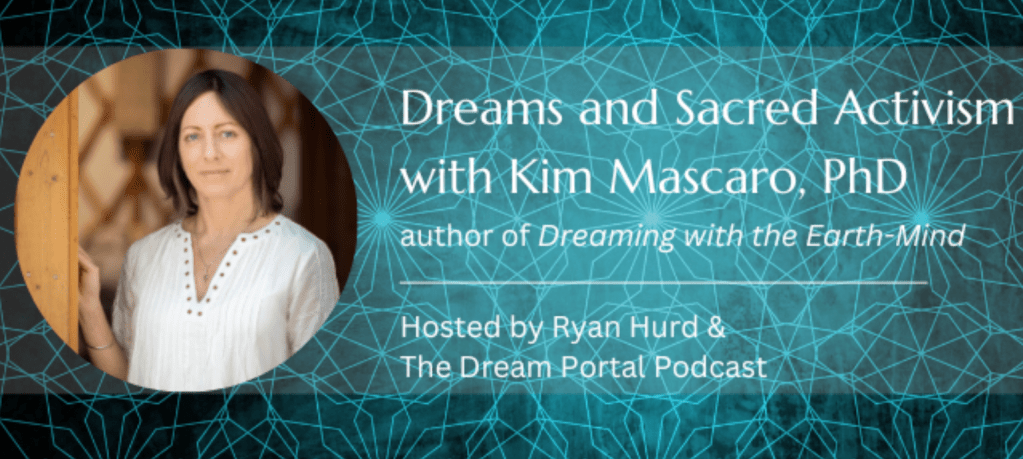
I think you’ll love LUCID, the new documentary by Melissa Johnson and produced by New Reality TV. She recorded the interviews at the annual conference for the International Association for the Study of Dreams in the Netherlands. This gave her a chance to talk to some powerful voices in the lucid dreaming community, including Robert Waggoner, author of Lucid dreaming: Gateway to the Inner Self, and some fresh voices on the scene, including Amina Mara, host of the Dreamworld Podcast, and psychotherapist Dr. Kimberly Mascaro, author of Dream Medicine.
Join us in conversation: Saturday 11/22
in case you missed this…
Dear Readers,
Thank you for following Conscious Chimera all of these years! I have made a change recently. In order to keep all of my content under one roof, I have relocated to Substack. My Substack account is https://substack.com/@consciouschimeraclassroom – PLEASE SUBSCRIBE.
Dr. Kim’s Conscious Chimera Classroom contains both paid and free content to subscribers. The topics or area of focus will remain the same – that’s anything related to human consciousness, wellness, spirituality and psychology. Instead of jumping around from YouTube to WordPress and other sites, all videos, slideshow lectures, papers and articles, blogs, audio recordings (guided meditations and yoga nidra), etc., can now be found here: https://substack.com/@consciouschimeraclassroom
Thank you again and I hope to see you on Substack!
Be well,
Dr. Kim
a new season of life
Just as seasons change, so do people. In my case, I have made a change to my business and the way in which I share my “projects.” Without further ado, I’ve decided to give all of my content one home. That is, on Substack. This change allows me to share all of my videos and presentations, audio recordings (meditations, etc.), slideshow lectures and written works on one platform. Additionally, Substack allows subscribers to choose between free and paid subscriptions (monthly or annual).
Please subscribe to Dr. Kim’s Conscious Chimera Classroom! https://substack.com/@consciouschimeraclassroom
Now that summer will soon be changing to Autumn with cooler weather (for those of us in the Northern Hemisphere at least), I thought this a wise time to make this change. Many of us will start to spend more time indoors allowing us to catch up on articles, videos, and the like. I hope you will consider subscribing today: https://substack.com/@consciouschimeraclassroom
With heartfelt thanks,
Dr. Kim
homeopathy in holistic care
Welcome back Conscious Chimera followers! You may remember Dr. Teri Jackson from the last blog – the anniversary article! Since she is so wonderfully valuable in the world of integrative healthcare, I’ve invited her back. She graciously agreed and will teach us a bit about a type of Western Medicine known as homeopathy. Enjoy!
As our discussion began, Dr. Teri Jackson (TJ) provided some history: Homeopathy was developed by the German physician Dr. Samuel Hahnemann. His observation as a medical doctor was that many of the medications at the time were highly toxic. Things that we wouldn’t even think of as having a medical application today, such as toxic substances mercury and arsenic, were used as medicines. Dr. Hahnemann considered how these medical applications that are toxic could somehow be beneficial. He asked, Is there a way that we can still preserve the health benefits of these toxic substances while removing the toxicity? So his idea was to dilute them to the point to where they still have their medical application, but they didn’t have any more toxicity associated with them. So that’s where homeopathy started from. So Dr. Hahnemann would take something like mercury diluted down hundreds of times in order to have this medicine that was no longer the way it was supposed to. So that’s the very basic tenet of homeopathy.
KM: It reminds me of how vaccinations work as well. There’s some diluting down of a substance.
TJ: Yes, that’s actually an excellent point. Now while vaccinations and homeopathy are not exact – not the same thing – it can be helpful for our modern mind to think about it in a similar way. So, with a vaccination we take virus or some other agent that will normally cause illness in a person, we then dilute it down, inject it into that person so their immune system can then identify that particular agent and attack it, and therefore support the immune system of the person. Homeopathy works in a very similar way in that when we’re giving a diluted version of a medication, it isn’t the remedy itself that’s actually effecting change in the person. Instead, it’s hitting their energetic system. As a vaccine will affect the immune system of a person, homeopathy addresses the energetic system of a person.
KM: Western medical practice seems to have forgotten about its past inclusion of energetics.
TJ: Yes, and in fact, for centuries, we had homeopathic hospitals and universities. In 1910, things shifted when the Flexnor Report was published via the Carnegie Foundation, essentially stating that natural modalities were bunk, and that all medical interventions should be
pharmaceutically driven. Prior to that, it was rather acceptable that natural remedies, including homeopathy, were part of any doctor’s tool kit.
KM: Yes. I recall a little bit about what you’re saying.
TJ: So what homeopathic remedies affect is what we call the vital force (of a person). In other traditions, such as Ayurvedic Indian traditions, we call it prana. In Chinese medicine, we call it Chi or Qi. In Western traditions, we call it the vital force. So just as acupuncture in Chinese medicine affects the chi/qi system, homeopathy, similarly affects the vital force. Basically, homeopathy works with the same energetic system as acupuncture.
KM: Okay, so vital force is the term that is used in the Western system, compared with prone or chi/qi in other systems. Thanks for bringing that up.
TJ: So the answer to your question about vaccinations that’s exactly how it works. It’s basically taking the diluted substance and triggering the innate vital force response of the person to self-heal and self-regulate.
KM: I see, that’s really great. Can you tell us about particular homeopathic remedies and their uses or applications?
TJ: Sure! There’s a concept in homeopathy called miasmatic theory. Certain attributes are passed down the generations and from a biological, physiologic genetic standpoint we understand this. We get our genes passed down from our parents, grandparents, great grandparents, and these certain attributes, physical, mental, emotional, are passed down and that’s something that we know and understand to be true. There’s another layer to that story that I think we talked about in our last blog interview, which was epigenetics. And that’s how our genetic code the DNA is concrete, but the expression of those genes can change depending on our environment (food, diet, stress levels, trauma are examples), all of those different types of expressions of genes are also passed down through the generations.
So this dovetails nicely with this homeopathic idea of miasm, which is that there are these core traits that we have as individuals that are passed down through the generations. And one of these miasms is the cancer miasm. So, Causticum, for example, is a cancer remedy in homeopathy. So is Carcinosin. These are remedies that although the constellation of symptoms are not exactly the same, the miasm is that of cancer. So, we understand that cancer can run in families and it goes beyond just genetic mutations. There is a constellation of characteristics and attributes that are passed down and then they manifest in several ways, so there are several cancer remedies.
KM: Since you named Causticum first, and I am also familiar with that remedy, please say a little more about how it can be helpful.
TJ: Causticum is one of the remedies for anxiety. Also, lesions and sores on the skin that have a burning quality. Also, we look at the personalities of the people and match the remedy to that personality as well.
KM: That’s right, because you’re treating the whole person – mind, body, spirit, emotional, all of that.
TJ: So sometimes I’ll ask a patient, “What makes you mad? What are the kinds of things that really anger you?” Someone with a Causticum constitution would reply with injustice, social injustice. Now people get can get angry about all sorts of different things. So if a person comes to me, and their primary complaint is anger, I’m not just going to give them a remedy for anger. I need to know what makes them angry. Why are you angry? With what are you most angry about? Out of social injustice? Are you angry because you’re holding on to a child resentment? It’s different for everybody. And so that’s where we have to understand not only the physical symptoms that a remedy can address, but also the personality traits.
KM: Yeah, good. Good points to remind us that we want to think in a more holistic way and an open minded way with these types of treatments, treating again the whole person. So you said there were hundreds and hundreds of homeopathic remedies.
TJ: Yes, there are literally hundreds of homeopathic remedies. The most commonly prescribed remedies are called polycrests. These are the ones you can find in the little blue tubs at health food or natural stores. Arnica is the one most people are familiar with which is known to help superficial things such as bruising and strained muscles. Polycrests are the very commonly used remedies that address a very broad range of symptoms.
KM: What else should we know about in this world of homeopathy. Anything specific to be aware of?
TJ: So the tricky thing with homeopathy is that as a layperson without training, if you’re going pick out a remedy for yourself, it really is a shot in the dark. One of the great challenges is choosing the correct remedy! Untrained people might think that homeopathy doesn’t work because they’ve chosen a remedy for themselves that is not the correct one.
That being said, there are some really commonly used remedies for certain mental emotional conditions. An example is grief. The big grief remedies are Ignatia and Natrum-mur. These are remedies that you can consider if you’re feeling grief stricken. Phosphorus and Arsenicum are two that are really good remedies for anxiety. But again, the underlying “pathology” is what is necessary to understand in order to choose the correct mental emotional remedy. It’s very individualized.
KM: That’s why it is so important to work with a trained professional.
TJ: Yes. While there are lay homeopaths, generally speaking, people who practice homeopathy either are a naturopathic physician like I am, or a medical doctor – many are practicing homeopathy. There are also certification courses that will certify lay homeopaths. Lay homeopaths are people who do not have a medical degree, but do have advanced training. And depending on the state, these people may or may not be licensed to practice medicine. In which case there would just be more of a consultant.
KM: Yeah, it does differ state by state. It’s really nice to learn more about this. Thank you for this introduction to homeopathy! A take-home-point for me is that we are much more than just a blob of matter. We are mind, emotion, and spirit as well.
TJ: And energetics!
KM: Right! I’d say that there are many kinds of medicine helpers, in different ways, and in different systems. Of course, consult with your health care provider. But the different systems can work well together.
TJ: Absolutely. These modalities are not mutually exclusive. Just like you use, you know, a lot of pain management clinics will utilize chiropractic or acupuncture. That doesn’t mean that you can’t do both. You can do traditional pain management along with these other modalities.
KM: Any last words before we wrap up?
TJ: Again, they are not mutually exclusive.
KM: That’s such an important reminder, that it does not have to be one or the other. We can choose integrative medicine.
Thank you for taking the time today to allow me to interview you!
metabolic approach to health and wellness – 8th anniversary article
To those of you who read this blog, I have a special treat for you today, which marks the 8th anniversary of Conscious Chimera. I (KM) was thrilled and honored when Dr. Teri Jackson (TJ) agreed to be interviewed for this anniversary article. Dr. Teri, as many people call her, is a naturopathic physician in practice for the last 13 years or so. She currently resides on the island of Maui. Those who know her, recognize her skill and vast knowledge with regard to the metabolic approach to health and disease development. Here, we will look at this through the lens of Dr. Nasha Winters’ metabolic approach to treatment and, most importantly, prevention.
KM: So, Dr. Teri, what is the metabolic approach and what are some common metabolic diseases that people are living with?
TJ: The basic tenant of the metabolic approach to health and wellness is that all disease at its core is due to a disruption in the metabolic function. The treatment approaches used tend to support the overall health of the person, rather than just going after the disease itself. We approach the whole person, not just the disease state.
Generally, when people think of metabolic diseases, the ones that really come to mind are diabetes, because that has a direct influence from our blood sugar control, which is metabolism, as well as heart disease, high blood pressure, high lipids, and high cholesterol. We typically think of those as metabolic diseases, but even conditions such as cancer, which our culture has been conditioned to think of as a genetic disease, is linked to metabolism. We now know that it’s actually more of a dysregulated metabolism that actually is causing cancer, not genetic mutations, per se. So it’s the dysregulated metabolism that causes the genetic dysfunctions, which then leads to cancer.
KM: Not the other way around!
TJ: Yes, exactly. So the conventional theory of how cancer develops is that there’s a genetic mutation and again, this is called the somatic mutation theory of cancer, and this is what conventional medicine focuses on – you know, attack the tumor, kill it, get rid of the tumor, because that’s the problem from the conventional perspective. But the way that we’re approaching cancer is that it’s actually the other way around.
It’s dysfunctional, dysregulated metabolism of the individual that’s actually creating these genetic mutations that then explode into the cancering process.
KM: So this approach seems to go more to the root cause, and look into what would cause genes to express in such a way…a harmful way.
TJ: Yes, that’s exactly right. And in fact, we don’t ignore genetics when we talk about the metabolic approach to disease. We are absolutely looking at genetics, and in particular a concept called epigenetics. So there’s the DNA, the genome that we’re born with, and that is unalterable, that is just who we are, but these genes can be turned on and off in different types of ways based on diet and lifestyle and stress levels. The mental emotional piece is actually much bigger here than a lot of people recognize – it isn’t just physical toxins in the environment that create epigenetic changes, but toxicity in interpersonal relationships, workplace dynamics, dysfunctional coping mechanisms, etc., also have a tremendous impact on genetic expression. So these genes can be turned on and off in either healthy ways to help promote the wellbeing of the person or they can be turned on and off in ways that are detrimental to the person’s health. How we live and breathe and move and sleep and light exposure – all of these really basic things – It’s not just administering supplements, it’s about getting those really foundational pieces into place, which is fresh air, sunshine, exercise, reduced blue light exposure from electronics, EMFs, etc.
KM: Talking about the epigenetic component reminds me of when I was in the first three years of my doctoral program, when we were really focused on prenatal and perinatal psychology. We talked about how in this earliest time – life in the womb, but also going back into the mother’s life, the grandmother’s life.

TJ: So it’s like you’re talking about this kind of mental-emotional piece, or psychological health, but it goes even beyond that. It goes deeper into the physiology as well. Because the eggs that females have were developed in her grandmother. All of us were in our grandmother’s womb.
This relates to the concept of epigenetics. So we can look at this as generational, you know, we can call it generational trauma or learning, and that’s more of a psychological approach to it however it’s based in physiology and genetics, and this idea of epigenetics. For example, part of the questionnaire that I have with some of my patients includes questions like “Did your parents, grandparents, or great grandparents, go through The Depression? Were they Holocaust survivors?” – these types of questions, because that kind of trauma turns into this generational trauma.
KM: Oh, and war! Through wars, for example, we are creating future generations who will have these genetic predispositions.
TJ: Exactly…That really isn’t part of your genetic blueprint as far as your DNA goes. It’s this epigenetic expression. So yeah, so it goes on, on all these different levels that generational trauma is passed on, and transmitted.
So we think about health, or lack of health, or disease as growing from soil, if you will. If we can consider ourselves as a garden, we are needing to nourish that soil in a way that can support us to grow and develop as a healthy organism. In this way, we can think of ourselves as a terrain.
An analogy that a lot of people use is that of the fishbowl. So it’s like if you have a goldfish in a bowl of water that’s just polluted and dirty, and filled with all manner of crap and toxins and no nutrients, you don’t just treat that fish with medications or even supplements. You would think that the way to help that fish is to just move it into a clean bowl. So the metabolic approach doesn’t just give the fish medication or supplements to help it retain its health. After all, this fish is in this dirty toxic soup. So we have to clean up the environment, both internally and externally. We have to address both of those.
So in order to remain well or heal from disease, we target the terrain. According to the metabolic approach, there are 10 different aspects of the terrain that we really want to address with each patient. We usually pick the top three to work with at first because otherwise it gets overwhelming for both the patient and the practitioner.
So we have to start with the top priorities. We’ve already mentioned genetics and epigenetics, so that’s one.There’s the digestive health and microbiome as well. That’s basically the bacteria and everything else. There’s also blood sugar balance. And off course there’s toxic burden which goes back to the fish bowl discussion. Here, we need to basically ensure that we’re in a clean, relatively toxin free environment. Immune Function is also huge because our immune function is basically that gateway that’s protecting us from our environment. Inflammation is another one. It’s been long known that inflammation is a root cause of many, many disease processes, and lots of people say that, but then we also have to get down beneath the inflammation. Inflammation is the cause of so many disease processes, if not all of them.

KM: We have to ask, but what causes inflammation?
TJ: That’s correct. So we have to go we have to dig deeper on that one by determining why the inflammatory processes are out of balance. It could be from an infection, environmental toxins, improper diet, allergies, etc.
And another one is blood circulation. We need to make sure that our blood is moving properly throughout the system in an unimpeded way which includes healthy cardiovascular and lung function. Hormone balance is another big one for the terrain. Hormone balance is critical, not just with women, with men as well and we’re not just talking about sex hormones. We’re talking about thyroid. We’re talking about cortisol and stress hormones. We’re talking about hormones in the brain that regulate hunger signals and satiety. So these hormones are really, really important to keep in balance. And this also actually ties into toxic burden because our world is so heavy and xenoestrogens, pesticides, and plastics which are totally messing up our hormonal systems. Not just with men and women, but with children even! Children are having these crazy hormonal symptoms that they shouldn’t be. Another drop in the bucket is stress. Again, the stress response and bio rhythms (such as circadian rhythms) are very important. I ask my patients, are you in bed by 10:00pm, or the very latest 11:00pm? Are you sleeping through the night? Are you getting up at an appropriate hour? Do you feel rested and refreshed?
KM: Sleep is a big one! One doctor said that if you have to do one thing, or make one positive change in your life, make it about sleep.
TJ: I agree. It’s true.
KM: Did we cover the Terrain 10 or is there something else?
TJ: Yes, there’s one more thing. That’s the mental-emotional piece. This is a piece that regular primary care doctors, even integrative health practitioners, tend to kind of shy away from this because we think it’s not in our wheelhouse. Sometimes it’s more appropriate to refer out to other practitioners if necessary (counselors or psychologists, other therapists), but we have to really understand that such a big piece of health and healing is this mental-emotional piece. It’s huge. Hundreds and hundreds of practitioners have just seen this time and time again. That is, that one’s attitude toward their health matters. Feeling positive and hopeful and having faith that their health can be restored does so much good for them. However, we also have to be careful not to push people into this toxic positivity, where they feel like they have to force this like, you know, Little Miss Sunshine, if that’s not what they’re feeling, because when you’re suppressing these very real, very normal, very validated feelings of fear and hopelessness and despair (genuine feelings), especially once you come up against a diagnosis, like cancer.
KM: Right, because then this so called “toxic positivity” can make it ineffective. It’s ineffective when it is not congruent. If you are in a true state of fear, but then telling yourself you have to say positive affirmations all day is, in my opinion, it’s a waste of time.
TJ: Right! It’s a waste of time, and it can even create more problems for the person because then we’re suppressing and stuffing stuff. A huge tenet of naturopathy is that we don’t suppress. We don’t suppress symptoms and we don’t suppress emotions. We have to get the stuff out, and process it as it comes out. You know, a lot of times, when people are facing a pretty serious diagnosis, they’re trying to stay positive and upbeat to protect the people around them. And that’s also really counterproductive.
KM: Yes, I totally agree. This is leading me to recall how I’ve heard Dr. Gabor Mate talking about the emotional lives of people with some serious diseases, most of whom are women. Knowing that the vast majority of those diagnosed are women when it comes to immune diseases (many of which have a metabolic origin) really hit me hard, especially alongside getting a peek into their inner, emotional lives.
TJ: I remember hearing this. You know, I haven’t always been in the integrative oncology world. I’ve actually got my initial training working with the allopathic conventional medical school in Portland: Oregon Health Sciences University. I did Breast Cancer Research for a number of years in Portland. And that’s kind of what we used to say. It was primarily breast cancer patients that we were working with. We would say that there are actually three personality types. There’s the Type A personality which we know of, you know, kind of typical type A, there’s a type B, which is like your chill, laid back, and then there’s your type C, your cancer personality type, which is what we’re describing as people pleasing. It’s this, putting other people first and ignoring your own needs in order to support others. And it’s also this piece of suppression as well. Coming back to this sort of idea that if we suppress our own needs, our own emotions, our own ugliness, things that we don’t want the world to see…
KM: Like the shadow?
TJ: Yes, thank you. That’s another really big piece to this C type personality, this cancer type. It’s this suppression and putting on a really good face and trying to present well to the world.
KM: So part of the remedy, in a way, a little slice of the remedy pie, is authenticity. Healthy expression of true emotion. And how do we see the shadow? Well I know we can see it in dreams. That’s just one reason why keeping a dream journal is important. We can also see it when we’re tracking our thoughts from a kind of cognitive therapy perspective. You can learn to track your thoughts and pay attention to all the rambling and just see what you’re stuffing and see what’s coming up or out.
So we’ve covered the Terrain 10, especially placing attention on the mental-emotional component.
TJ: Homeopathy, which is a gentle treatment, sits well with the metabolic perspective in that we are not just treating the disease state, we are treating the person.
KM: Right. My understanding of how homeopathy works is really important because if you’re looking at it from a strictly Western mindset, one that’s of a Newtonian, reductionist, materialistic perspective, homeopathy doesn’t make any sense. So looking at the energetics behind things, understanding that we are electric beings, energetic fields, if you will. So homeopathy can marry well, I think, with that holistic, whole person approach.
TJ: One thing that really pops into my mind right now is a questionnaire that we give all of our new patients – this is the Adverse Childhood Experiences.
KM: Oh yes! I administer that to all of my therapy clients as well. It’s so very important.
TJ: One thing that I’ve learned through my own therapeutic process is that the situations we were put in during childhood really do follow us into adult life.
KM: Exactly, and now we have the proof!
What’s beautiful about the ACE study is that it is validating. It helps people understand that the childhood trauma they experienced can have a powerful direct (negative) impact on their adult selves. The trauma endured, or rather survived, by a child is never their fault, however it is their responsibility to heal from it. The work put into the healing from the grief, terror, deep pain, leaves a positive impact on the world and others, including their own offspring. To recover fully, we must go through an often lonely process of naming it or recognizing it, claiming it by taking ownership, and then releasing it or dumping it.
TJ: So just for example, as far as the mental-emotional adverse childhood event, or even adverse anytime in your life event, for example, when we see gynecological cancer, we have to think about sexual trauma. When we think about, you know, lung cancer, we think about grief. So this is where we kind of tie in some of these concepts from Chinese medicine, emotional, mental states that we tend to associate with a different organ systems. So when we look at things like the lung, that’s really grief. When we look at people with liver cancers, or any kind of liver problem, we have to look at, you know, how do you process your anger and your frustration? Are you able to process that in a healthy way? Or do you lash out, do you rage? Do you stuff it down and then self harm by expressing that anger toward yourself?
Prostate cancer, like gynecological cancer, can have a relationship with one’s difficulty with expressing healthy sexual expression, in a nontoxic way. How do you manage or express your masculinity? Are you able to connect with another in a healthy way? These are challenges for men in this culture.
Now with cancers related to the bladder and kidneys, anything that has to do with the urinary tract actually, we think of fear – like an existential fear – not necessarily a fear about anything in general. Essentially, it’s like “what does it all mean?” You know, being fearful in the world.
But with regard to treatment we must look at the toxic burden for these cancers. So, What are you eating? What’s your water like? Are you drinking too much alcohol? That kind of stuff.
KM: Right! A slice of the toxic burden pie, when it comes to bladder, kidney, or urinary tract cancers might come from exposure to the news, especially these days. News stations need their audiences to be fearful of the world because that gets them to tune in more often…higher ratings. One of the best things I’ve ever done, is make the decision to not own a television and not watch the news, except for perhaps on a bi-weekly or even monthly basis. I see it as a protective factor.
As we wrap up our time together today, Dr. Teri, is there any last thought you’d like to share?
TJ: The one thing that I just see time and time again in patients with all kinds of health conditions is how are you speaking your truth? How are you expressing yourself in a genuine and authentic way? Especially in this culture that we find ourselves in with so much focus on external appearances and where we feel like we have to present ourselves to the world in a very specific way. Discover what you love and do it! It can be your love for art, dance, music..any kind of healthy expression of who you truly are. So figure out who you really are and what you really want out of this life. That will be more potent, more powerful than any drug, any supplement, any dietary intervention that we can come up with.
KM: I love this. Dr. Teri, thank you so much for sharing your wisdom today and for taking the time to be here. I appreciate you.
To Your Health,
Dr. Kim
#metabolichealth
#mindbodymedicine
#metabolicapproach
#naturopathy
#trauma
#cancer
biohacking and dreaming: an unlikely pair?
What are you willing to do in order to be at your very best?
How far would you go? Which risks are really worth it?
Since there are so many aspects of and so many options for bio-hacking these days, ranging from age old practices to contemporary ones, just about anyone can give it a try. From oral supplements, dietary changes, injections, IV therapies, external/wearable physiological tracking devices, implantable biotechnologies, and more, just about anyone with extra income can bio-hack their body, in one fashion or another, in an attempt to reverse aging, elevate performance, and increase vitality. I have found some of the methods to be quite extreme. But couldn’t one engage in biohacking for little-to-no-cost with little-to-no risk by utilizing their innate gifts? I would say so, and that is through attentive engagement with sleep, especially dreaming. While napping and extra long hours of nightly sleep can be viewed as a luxury, the free practices of dream incubation, as well as lucid dreaming, can open up a whole new world. Such nonordinary or altered-state-of-consciousness biohacking is low-level and safe. Double-bonus: these no-cost strategies, skills, and techniques can take as little as 10 minutes out of your day (or night, depending). First, I will share some words about the practice known as dream incubation, then I will say a little about lucid dreams and how they might relate to hacking our biology.

Biohacking is all the rage these days, the latest DIY (do-it-yourself) craze. You can find dissertations written on the topic, as well as, articles published over the last 14-15 years in journals like Nature Biotechnology (2009), BioSocieties (2017), and Futures (2021), differentiating between biomedical citizen scientists and fringe biohackers, alongside how hobbyist, activism, art and science intersect within a DIYbio landscape. Here, they note the risks involved, and the fact that research on such “hidden populations” brings with it many challenges. Even Forbes has highlighted the topic over the last couple of years. DIYbio practitioners, or biohackers, are increasing in number and the phenomena itself is increasing in popularity with each passing year. And why shouldn’t it? Everyone wants to be at the top of their game, and to feel that sense of control when it comes to taking charge of experiencing optimal health, peak performance, with the hopes of extending living with quality over one’s lifespan.
Dream incubation can be used for a wide array of needs. It is an ancient practice. Dream incubation involves sending out an intention before a nap or bedtime to ask for guidance and knowledge. The manner by which one sets up a dream incubation ritual can be simple or complex. The ritual aspect is important because effective rituals are done with great focus and intention – never autopilot. Dream incubation is at home in the biohacker world because it can be utilized for diagnosing or better understanding health-related conditions or concerns and in support of healing those.
DISCLAIMER: The information in this article is for educational and entertainment purposes only. The information provided here is NOT a substitute for medical care. If you have any medical issue, of any kind, please go see a physician.
Okay, now back to dream incubation. Possible questions or statements to include as part of the dream incubation process could be any of the following – but be ready, knowing that what you ask for, you just may well receive.
“Show me a mirror that can allow me to see into my body, revealing health or illness.”
“Which foods are best for my unique makeup?”
“Show me the supplements my body needs right now for XYZ.”
“What practices I do at this time in my life for peak performance?”
“Show me a solution to this problem (or situation or issue).”
“What area of my life needs my attention right now?”
“How can I heal from this?”
“Please give me a direct healing in my dream.”
“Take me to the time and place where the root cause of this problem came to life.”
“Show me the circumstances surrounding this concern I have.”
You may also craft your own, of course – Just be sure it is done in the positive and affirmative. Make the question or statement short and to the point. Once you have one, write it down on a piece of paper while expressing it out loud. Proclaim it. Then, place that paper under your pillow. Once you are in bed, cozy and comfortable, focus on the statement or question you chose as you drift into dreamland.
Write down, draw or sketch out, or if you prefer, audio record anything you recall immediately upon waking up from the dream. Keep at it – use one intention for a full week or even two. This consistency increases its effectiveness. Once you have something, reflect. You may do a daily reflection, or wait until you have recollections accumulated from a few days of practice. I’ll add an important point here: anything a dream provides – all wisdom coming out of the dream world – deserves a thank you offering, even an offering as simple as a prayer is fine. You don’t necessarily have to offer up an object. What comes with including dreams into the bio-hackers world, is a relationship. This way of working is not a secular transaction. I’ll say more about this in the final paragraph of this article.

I’ve practiced dream incubation quite a bit for many reasons. Years ago when I was searching for healing and cures in the dream state due to a medical condition I faced, I would regularly begin my evening with a dream incubation ritual. For some nights my recall seemed nonexistent while other times I awoke with a lot of quality information relevant to my situation. One time in the dream, a colleague who also happened to be an amazing lucid dreamer appeared right in front of me, holding “the cure” in her hands. It was a frame drum made from natural materials, slightly larger than the ones I was used to seeing. I awoke immediately after this very direct and clear wisdom was provided. I awoke angry, and sad, because after having spent years studying traditional healing ways as a, primarily scholarly endeavor, I knew what “a call” looked like and how they could appeared. Even worse, I knew what happens to those who do not follow through…those who “refuse the call.” So that this story remains a short one, I am sure you can guess what I did. That was to begin the multi-year long training with a noted, quality teacher and surrender as I embark on the deep, deep dive. Even though I was exhausted, overwhelmed, and frankly, just didn’t want to to do it, I did so regardless of the investments of time and cost. This path includes ceremonies that honor the gifts that emerge from the altered state practices, so many prayers are offered, naturally. So, while a free biohacker support, dream incubation can lead to something you might not want to do, or even want to know. Therefore, be clear before you proceed.
Now let’s move on to lucid dreaming. As for those of you who lucid dream skillfully and fairly regularly, you can use any of the statements or questions above in the lucid dream state. You might address the dreamscape first. I’ll share an example from one of my own experiences with lucid dreaming and healing. Upon becoming lucid, I called out, “Dreaming Mind, show me how to heal this condition!” I have also asked, “Dreaming Mind, what is the root cause of this condition?” Additionally, “Dream, take me to XYZ so I may understand XYZ.” Remain open and receptive to what is shown or revealed in that lucid state. Again, write down, sketch out, or audio record anything you recall upon waking up from the dream. But, of course, do not jump out of bed so quickly. Remain still for a few moments as you collect yourself, mentally gathering together what you recall from the experience.
While lucid dreaming is as popular as biohacking these days, remember that lucidity does not equate to superiority. Ordinary dreams are truth teller. In addition, the liminal zones, in fact, offer some of the best information out there, so do not dismiss them. By this, I mean, as you relax prior to sleep, stay alert enough to catch solutions whether they arise as sounds, voices, or images that may come forth before drifting off to sleep. This pre-sleep zone is rich in what it can offer. On that note, be aware when you are awakening as well, as it is another valuable time period for gaining insights and catching solutions. These are the liminal states of consciousness. Some time ago when I was dealing with a condition and using the dream arts as part of my healing protocol, I heard a strong and direct voice in a liminal state. It was a teacher of mine reminding me how the body knows how to heal itself (given the right conditions). While not a diagnosis nor a remedy per se, the liminal dream did inspire me. The experience also served as a reminder for me to provide the correct, necessary conditions so that I may move along toward a state of healing from within.

No matter which dreamy state you find yourself in, remember to remain physically still as your awareness rises in order to enhance recall, whether those dreams be ordinary, liminal or lucid. Treat them all with the same respect. May your dreams be your medicine, as I always say! Stay open and receptive. Allow yourself to be surprised.
I’ll wrap up by returning to a point I made earlier. That is, how important it is to act on any and all information your dreaming mind gifts you. “Dreams require action,” as Robert Moss has said. So, do something to honor the dream. In addition to ceremonial prayer, one of the other ways I have done so is through creating art. I have made paintings based of what I saw and sensed in my lucid dreams, as well as collaged images from ordinary dreams that threw me for a loop as a way to process and understand them in deeper and deeper ways. Poetry or song are other possibilities. And since we are talking about bio-hacking here, be sure to visit your doctor anytime a dreams shows you a possible or potential illness or medical condition brewing. It’s better to be safe than sorry.
Happy 2024,
Dr. Kim
no words, but these…
I thought I had left trauma work for good; Or at least for the most part after I was diagnosed. My body, my nervous system, my immune system: the impact zone.
Cycles of healing, redefining, reworking, re-examining life, my heart, my mind. Actively turning attention to life’s beauty…and joy. Recalling the cyclical nature of existence itself. And still, maintaining hope.
Now I sit just a few miles south of ground zero. No longer a direct hit to my body, but a scorching of the collective spirit. The sun was not the only force to show no mercy that day.
Today, trauma is the air we breathe. It’s not attached to work, but to my neighbors eyes. A three hundred and sixty degree, twenty four seven kind of therapy session. One that comes to no end.
#mauistrong
#lahaina
If you can help, links to orgs making positive impacts are below – Mahalo,
Dr. Kim
https://www.hawaiicommunityfoundation.org/strengthening/maui-strong-fund
portals to the afterlife
As I exit the building, I notice how it’s a warm and sunny day. I see my beloved Nonni sitting on a structure, like a cement block, in a park. She is having a lively conversation on a cell phone (even though they were not common when she was living).“How strange,” I think. I have a good feeling when I see her. She’s wearing a pretty violet and blue dress…. As I greet her with a touch and a kiss, I can feel here, I can smell her. It all seems so real [taken from a segment of a dream logged in my dream journal in April 2020].
Just a couple weeks ago, I attended the 40th annual conference of the International Association for the Study of Dreams (IASD). This year the IASD held its annual conference in Ashland, Oregon. These conferences are a yearly highlight in my life. Not only do I learn about the latest in sleep and dream science, I also get to bond with my dream tribe (some of which I have known now for a decade). This interdisciplinary family of sorts is a rare treasure. These are people who I understand, and they understand me. How precious to experience the freedom of partaking in open, nonjudgmental conversation about nonordinary states of consciousness, like lucid dreaming or profound healing dreams. Our time together at the conference extends beyond discussion, meaning that much of what we do is experiential. These are people who, while grounded in science, pay attention to their entire self: mind, body, and spirit.
I was feeling excited leading up to the conference for those reasons and also because my proposal to lead an art-based workshop was accepted. The title was Honoring Deceased Loved Ones: Intersecting Visitation Dreams and Shrine-making, yet more specifically, how visitation dreams & shrine/altar-making act as a ‘feedback loop portal.’ Are you familiar with the term visitation dreams? Those who have experienced visitation dreams have described them as vivid, vibrant dreams with potency – they are not easily forgotten. Some say that they are left feeling like they have received a visit from a deceased person or spiritual being. Visitation dreams are much more than simply recalling a deceased person in a dream because with visitation dreams, sometimes important messages are shared. One of my most recent visitation dreams was in brilliant color and I could smell my loved ones and feel the texture of their clothing (as noted in the dream I shared above). We communicated without words.

For more on visitations dreams, check out chapter 10 in my latest book Dream Medicine.
In that workshop, I also shared how I got involved in shrine/altar-making in the first place. While my parents hung a shrine to Saint Mark in the backyard of our family home, my own first shrine was created to honor our family. Later, in 2004, a colleague and I began offering shrine-making workshops for children who had lost family members to addiction. Some years after that time, I introduced the shrine-making process into both group and individual psychotherapy sessions. Most recently, this has made its way into my dream-based presentations at conferences. So, I will say something on how I blended the two. It wasn’t so much my doctoral research on dreaming that led the way, as it was my personal experiences with memorable and impactful visitation dreams. Additionally, having listened to the visitation dreams of clients alongside witnessing the power of the shrine-making process, in the end I blended the two.
The grief that comes with the death of a loved one must be processed, and not bypassed, if one is to remain psychologically healthy. Once that loved one is no longer in physical form we can maintain the connection through the dreaming-waking continuum. The shrine/altar can serve as a sacred space to pray, reflect, remember. It can also become a portal for communication, so the shrine/altar & the dream interact. For example, when a deceased loved one presented me with a rose in a dream, I placed a rose at her shrine as a way to say “I remember that rose you had for me in the dream. I was paying attention.” Or, if I’m desiring a dream visit, I can approach my shrine and leave an offering, a letter, or a gift meant for the deceased loved one I want to connect with. It’s a way to encourage another dream, like a special addition to a dream incubation process.
While I have used the terms shrine and altar interchangeably, there is a difference. So, this was discussed in the workshop too. I like participants to understand the contextual distinction so that it can inform their process and practice. Shrines are most often permanent structures that exist year-round. They might have been constructed as a way to honor, give thanks, and bond a family or community centered on someone, such as a saint or family matriarch. An altar may more often be a ‘working’ space. An altar might also serve as a sacred space for deceased loved ones to ‘hang out.’ Knowing this, an altar space might ‘open and close’ – that is opening when the altar is being tended to, and then close up when a cycle, time period, or work has been completed. Items or elements might change in/on an altar as consistent offerings are made. Sometimes, jewelry once worn by the deceased may be present at the altar, alongside a favorite drink. Altars can also be ‘charged’ with more than decor, but intention.
We began the 2 hour workshop with discussion and dream sharing on aspects related to what I’ve noted above followed by an individualized shrine-building activity. Workshop participants took their personal crafted piece home to further embellish, build on and work with. If you missed the recent workshop or have never attended one of my offerings, I will now provide some ideas for getting one started on your own, so please read on.

First and foremost, always keep a record of your dreams, through either a hand-written or typed dream journal or even recorded voice memos. As for creating a shrine, there’s no right way or set way to begin. However, I’d suggest choosing a space that can be a dedicated area – so that pets, children’s hands, wind, what have you, won’t disturb the space. Next, consider your vision for the shrine – will it be a solo activity, or communal? Who or what will be center stage? What size is appropriate? Which colors are most meaningful? Does the shrine need to travel with you? If so, consider making the shrine in a wooden box or other solid structure. Some people keep their shrines very simple, while others are more decorative. Consider what you will need to create the basic structure. Will you need paint, glue, or nails? Gather your most important or most cherished altar items. I also think it’s nice to have space for an offering dish so appropriate items (even food or water) can be placed in it. Once you have a basic sketch or vision, begin the process of construction. Do the foundational parts first, then work your way toward adding details. Work slowly and with great intention. It’s also fine to take several days or weeks to do this. Take your time, please. Enjoy the process. After all, you are building such a meaningful creation!
If you have any comments, please post them here. If you enjoyed this article, please like and follow Conscious Chimera.
In light,
~Dr. Kim
 Conscious Chimera