another dream conference begins…

Due to orchestrating a major relocation, I took about six weeks off from writing. The break was helpful. For a short while I forgot that I blog. Sometimes that happens in life – we turn our attention to pressing matters and lose touch with our routine. 

Now that things are starting to settle, I can give my full attention to what’s occurring at the moment. That is, the 39th annual conference of the International Association for the Study of Dreams (IASD). This year, it’s being held in Tucson, Arizona, at a beautiful resort, and Day 1 of 5 begins tomorrow evening. Join us for a day or even the full conference if you are nearby! 

What’s especially enticing is the keynote presenter line-up. I’m really excited to get to see Dr. Stephen LaBerge for the first time. He is one of the few researchers responsible for putting lucid dreaming on the map of western science. If you are unfamiliar with the concept, lucid dreaming is when a person is dreaming while knowing they are dreaming. Prior to LaBerge’s work at Stanford University’s Sleep Laboratory and the work of a handful of other dedicated scientists, the ability to dream fully conscious, that is lucidly, was highly doubted. Even with countless credible anecdotal reports of the phenomenon, those in academia and the sleep research field thought the notion of lucid dreaming was ridiculous. Today, lucid dreaming has been demonstrated in hundreds of sleep studies and has become a hot topic – you can find dozens of symposia on lucid dreaming at IASD conferences.

If you are not a natural lucid dreamer, not to worry. Lucid dreaming is a skill that can be taught. With practice, one can enhance that skill and, well…the amazing adventures await you. Sure, dreaming with awareness can make for great fun, yet it can also offer a space (a dream space, of course) to practice and develop talents and abilities such as improving your golf swing, developing a poem or new musical piece, exploring far away places, and solving challenging math problems. There’s much more one can do while lucid in a dream, but hopefully those examples were enough to whet your appetite.

During a spontaneous lucid dream not terribly long ago, I used my dream awareness to see if I could get some answers to health-related questions of great concern. My dream began as one typically does, then suddenly, something in the dream prompted lucidity and with that spark of awareness, I recalled the health challenge I was facing. I realized this was a precious opportunity, so I called out to the dream space: “Dreaming mind, how do I heal this condition?” and (after a response was given),  “Dreaming mind, what is the root cause of this condition?” The responses I received offered guidance, information, (and some surprises) so that I could consider how to proceed in my healing journey (If you plan to attend this year’s IASD conference, consider sitting in on Tuesday’s Health and Healing Dreams panel, where you’ll find me, along with two colleagues, sharing our research and personal experiences on this topic). 

So why wait until a diagnosis is given? Why not use lucid dreaming as a tool now, at this time in life, in order to inquire into what the physical body may need? There is so much to be explored and discovered through experiencing this phenomenon directly, personally. This is gnosis – knowing through direct experience – rather than through theory or someone else’s descriptions. Direct revelation is powerful, and very personal.

If you are interested in lucid dreaming and want to learn more, including the eastern perspectives and spiritual aspects of this practice (known as dream yoga), check out my book, Dream Medicine: The Intersection Between Wellness and Consciousness (2021). There, you will find multiple perspectives and see what the dozen plus professionals I interviewed have to say about dreaming. Dream Medicine also includes tips, techniques and strategies to get you lucid asap. 

May you know good health. May your dreams be your medicine!

~ Dr. Kim

amulet-making as folkloric craft

This is part 3 of a 4-part blog on amulets & talismans.

As we saw in part 1, amulets come in many diverse shapes, sizes and materials. They hold natural virtues for warding off evil, guarding against negativity, and protecting the wearer or carrier from harm. Part 2 highlighted ways to cleanse amulets.

Have you enjoyed this blog series? If so, join me for the Dream Medicine Retreat I’ll be hosting in Mexico. Details are here: www.ConsciousChimera.com/Retreats

Now, let’s take a look at how we can get crafty and creative!

Customizing Your Own 

In addition to those examples of amulets described in part 1, an amulet pouch, medicine bag, or charm bag can be created. These are often worn around the neck, pinned to a person’s clothing, or placed in a pocket or under one’s pillow. These little bags/pouches can be filled with various items, such as herbs, flowers, crystals and icons. No sewing is required. Simply cut a piece of appropriate colored fabric into a square or circle. Felt, silk, or cotton work fine. Place the amulets of your choice in the center and use a six- to eight-inch string, ribbon or thin leather cord to tie the pouch together at the top. This can be done similar to a European sachet—I’ve been fond of those since I was a little girl. 

Choosing the Best Color for You

Traditional English as well as African American bags are often constructed with red fabric, however, colors correspond to particular attributes, so the use of red is not always necessary. Consider the following additional possibilities – these are just a few examples:

Photo by monicore on Pexels.com

* Blue for emotional and mental healing

* Green for financial success, prosperity, and physical health matters 

* Purple for confidence, power and success

* White for general protection and purity, or in place of any color

The color you choose in itself can serve as a reminder for what you want. So if I want to protect my physical body or protection around material matters, I’d go with green. If I need to protect my mental and emotional states, I would choose blue. Purple can serve as protection for my personal boundaries, self-esteem, or sense of self. This is the way I think about it, at least.

Today, not only do I carry amulets during the day when I feel I need them, but I often have them on or near me at night when I sleep. This can be one method to help protect people as they dream, go into deep meditative states or trance, or even embark on a conscious, intentional out-of-body experience. Part of maintaining health, in my opinion, is taking action to protect our energy bodies and psyche/soul. Working with amulets is one way to do so.

Thank you for reading part 3 of 4 – the next article (part 4) will focus on talismans. For fuller exploration of this subject, read Dream Medicine: The Intersection of Wellness and Consciousness (Toplight Books, 2021).

Have you enjoyed this blog series thus far? If so, consider joining me for the Dream Medicine Retreat I’ll be hosting at the beautiful Mar de Jade Wellness Resort in Chacala, Mexico. Details can be found here: www.ConsciousChimera.com/Retreats

the what and why of amulets

Welcome to part 1 of a 4-part blog series on amulets & talismans.

If I asked, point blank: Do you intentionally carry an amulet? You’d likely say no. It’s not something on the forefront of most people’s minds. Were you ever gifted a rabbit’s foot? I was, and as a child I carried it with me…at least for a while. Or maybe instead you whisper, “rabbit, rabbit” at the start of each month. Either way, calling in good luck, or repelling bad luck, with various objects is serious business within cultures across the globe.

These days it seems that amulets are somewhat increasing in popularity, yet again, these are not objects at the forefront of one’s mind. The rabbit’s foot as a good luck charm was quite popular in the United States and Great Britain for decades. The history of this particular amulet is not entirely certain and is connected to several possibilities.

So what exactly is an amulet anyway? 

An amulet is said to contain natural virtues used for warding off evil, guarding against negativity, and protecting the wearer or carrier from harm. As a protective object an amulet can come in many shapes and sizes. The power is within the material. In short, an amulet repels what we don’t want, claims Mary Grace Fahrun, author of Italian Folk Magic (2018).

Here are some examples of common amulets which are culturally and situationally dependent:

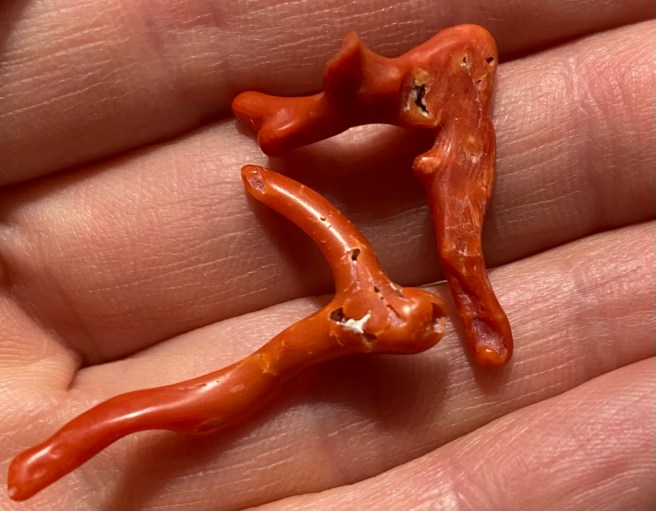
Coral

Vervain

Thyme

Garlic

A leaf of Bay/Laurel

A fresh or dried sprig of Rue

Amber

Silver and Gold

A stone, gem or crystal (such as quartz, amethyst, tourmaline, carnelian or onyx). 

Italian red coral is considered an amulet.

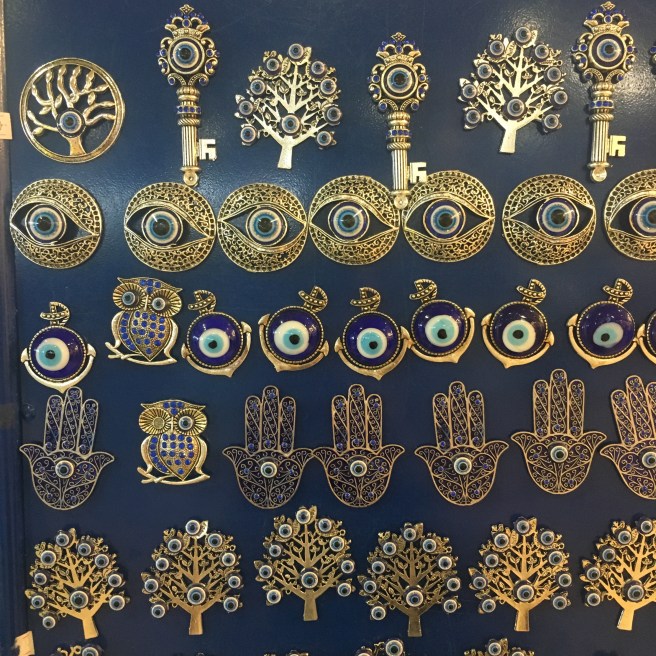
Amulets can offer protection in all states, whether in dream, meditative, visionary or waking states. Furthermore, amulets can serve as a general protective element as well as carry a unique function. One historical example is how fossilized amber was used for preventing nightmares with children. Another example could be the Italian corno or hunchback or the hand of Fatima, all of which are meant to provide a specific function—protection against evil eye. 

Apotropaic (aka protective) magic refers to the power to avert evil or harmful influences, bad luck, misfortune, or the evil eye. The popularity is evident, even today, by the vast number of apotropaic amulets and talismans sold worldwide. A very early example comes from ancient Greece in the 4th-century BCE – a relief showing Asklepios performing a healing ritual with a serpent and two apotropaic eyes above. These talismanic ‘eyes’ were also commonly found on ancient Greek vases and throughout parts of the Mediterranean region. See part 4 of this 4-part blog series for more on talismans.

From my visit to the archeological museum in Thessaloniki, 2019.

In the book The High Magic of Talismans and Amulets, Lecouteux (2005) provides some history on the origins of the word amulet: In the first century BCE, we come across the Latin word amuletum, derived from amoliri, meaning to protect, to drive away. Considering what amulets are and are not, the most striking example I’ve come across is revealed below. What you see is below is from an excerpt from my 2021 book, Dream Medicine:

Considering the notion of general protective capacities, let’s turn to Celtic traditions for a moment. Healing, wisdom and truth are sourced from severed heads. The most extreme example of an amulet I have ever come across, unsurprisingly, is that of a human skull fragment. According to Tom Cowan, author of Fire in the Head: Shamanism and the Celtic Spirit (1993), ancient Celts were well known for “their cult of the severed head” (p. 35); they flaunted the heads of enemies from their horses or their own necks. Celtic warriors wore human skull fragments as amulets. Sometimes the entire head was placed on a gatepost, outside a doorway, or on top of a stake for protection. In belief systems where the soul is immortal, residing in the head while alive on earth, it is not surprising that claiming or keeping one’s head “was the same as possessing that person’s soul, spirit and personal power, analogous to the practice found among some cultures of eating the heart or brain of a noble warrior or admired enemy in order to ingest his strength” (Cowan, 1993, p. 36). How about that for a power object!

Now that you know what amulets are and why people carry them, we’ll turn our attention to their care in the next part fo this blog series.

~Dr. Kim

Consider joining the Dream Medicine retreat in Mexico this Fall – we are booking now, so get all the details here: www.ConsciousChimera.com/Retreats

Thank you for reading part 1 of this 4-part blog series. The next part (2) will place attention on the cleaning of amulets. For fuller exploration of this subject, read Dream Medicine: The Intersection of Wellness and Consciousness (Toplight Books, 2021).

#traditionalways

#magic

#power

#ritual

#amulets

#ancientgreece

#talismans

#goodluck

#folkmagic

#craft

#folkloric

#protection

#evileye

#Asklepios 

#rabbit-rabbit

#apotropaic 

8 perspectives on your dreams

Dreaming is hot this year. Actually, the world of dreams and the dreaming mind has received great attention since sheltering in place began. While everyone dreams every night, some people report little-to-no recall. Many people only started paying attention to the dream lives with the arrival of 2020. Sheltering in place led to increased sleep among certain people who noticed an increase in dream recall. If attending to dreams is new for you, you may wonder what it all means. To help, I will share eight perspectives on the function of dreams.

The psychodynamic perspectives seem to be most familiar to dreamers. Freud would have said that dreams express hidden instincts and reflect one’s instinctual drives. Wish fulfillment may have played a part in the conversation analysts of Freudian dream theory. Around that time, Jung developed his own ideas. He is credited with the Compensatory or Complementary Hypothesis which suggests that dreams are a natural expression of our imagination. Furthermore, dreams, he would tell us, integrate our conscious and unconscious lives.

As time went on, and science further developed, Hobson’s Activation-synthesis Hypothesis claimed that dreams were not as meaningful as once believed because dreams arose from neurochemical changes in the brain, nothing more. But this wasn’t the only explanation for dreaming. A cognitive perspective emerged where Hall posited that dreams are continuous with the dreamer’s waking concepts, meaning that one’s dreams reflect one’s waking life concerns. This is known as the Continuity Hypothesis. Attention has been given to developmental perspectives as well, so theories of information processing and dreams are also important to consider. In this territory, we marry dreams with memory consolidation. We can’t deny that dreaming plays an important role in the life of every human. Dreams help process and organize stimuli from the day as well as help us store information into memory. Let us not forget the role dreams play in human evolution! Dreaming has an adaptive function and threat stimulation theories abound. Consider all that dreams do here: Dreams help us adapt to current life situations and circumstances; Dreams provide an opportunity to perceive and avoid threats; From a social aspect, dreams allow for practice and even the strengthening of social bonds. It is not necessary to recall every dream because much of this takes place below conscious awareness. Have you ever wondered how dreams might aid in the processing of emotions? Hartmann’s contributions towards emotional processing theories are worthy of attention. Did you know that dreams help us to process emotional experiences and even adapt to them? Dreams partly do this because they integrate recent emotional experiences with other past experiences – ie they’re very associative. Furthermore, dreams can help us to solve problems in that way (though more emotional problems/conflicts in life). On a personal note, my dreams have been very valuable for such reasons.

Transpersonal psychology has something to say about dreaming as well. Images and symbols are part of us and reveal the dynamics of our inner life. Dreams show us, in symbolic form, all of the different personalities that interact within us and make up our total self.

Last, but not least, are perspectives on dreaming that emerge from traditional ways of knowing and indigenous cultures around the world. Here, we acknowledge soul and spirit, and the interconnectedness of all beings. Dreams serve to guide and offer spiritual sustenance. When we dream, our soul may travel. These perspectives are more fluid. There is little or no separation among waking and dreaming states, or those in between.

So, are you recalling your dreams lately? If so, I hope you are keeping a dream diary! When reflecting on your dreams, refer to this article as often as you like. There are several perspectives to consider! Consider one or all of them when determining the meaning of your dreams.

If you’d like to take a deep dive, and have a blast doing so, you may want to attend my October dream retreat in Mexico. Information can be found here: https://consciouschimera.com/retreats/

I wish you a rich dream life,

Dr. Kim

be still and know

Almost immediately after posting the last blog, I learned of the death of Zen Master Thich Nhat Hanh. If there is one word to describe him, I’d say it is PEACE. In honor of this global spiritual leader, I dedicate this piece of writing to Thich Nhat Hanh as well as all those who live, act and lead with compassion. 

What I feel most moved to share here, today, are about a dozen of my favorite sayings, or quotes, from diverse spiritually-based lineages. Of course, I will begin with a few wise words of Thich Nhat Hanh

“The past no longer is, the future is not yet here; there is only one moment in which life is available, and that is the present moment.” 

“When we are mindful, deeply in touch with the present moment, our understanding of what is going on deepens, and we begin to be filled with acceptance, joy, peace and love.”

“Life is available only in the present. That is why we should walk in such a way that every step can bring us to the here and the now.”

Taoism also embodies great wisdom. Here are some sayings attributed to Lao Tzu:

A good traveler has no fixed plans and is not intent on arriving.

Care about what other people think and you will always be their prisoner.

Nature does not hurry, yet everything is accomplished.

Stop thinking, and end your problems.

And, of course, who doesn’t love Rumi? Here are some of the mystic lessons emerging out of the inspiration of Sufism:

Remember, the entrance door to the sanctuary is inside you.

You are not a drop in the ocean. You are the ocean in an entire drop.

If the light is in your heart, you will find your way home.

Photo by Johannes Plenio on Pexels.com

We have living treasures as well. If you are a Nor Cal local, you may have spent time at Spirit Rock and sat with Buddhist monk Dr. Jack Kornfield. Below you will find a couple noteworthy quotes: 

“As surely as there is a voyage away, there is a journey home.”

“Everything that has a beginning has an ending. Make your peace with that and all will be well.”

And last, but definitely not least, I want to put attention on His Holiness Tenzin Gyatso, the 14th Dalai Lama. I wish to see him in-person one day. However, I will close with one of his sayings that now feels somewhat ironic:

“Remember that sometimes not getting what you want is a wonderful stroke of luck.”

This month makes another Conscious Chimera anniversary, and another Valentine’s Day. Thank you for following my blog and reading these writings I share with the world!

May you know love and peace,

~Dr. Kim

to enter the state of heaven

I hadn’t planned to write about near death experiences today, even though the last time I wrote on the topic was early 2018. Yet, a new friend living in Chicago highly suggested I read Dying to be Me by Anita Moorjani. Dying to be Me is Anita’s incredible, jaw-dropping account of her experience with end-stage cancer, the near death experience (NDE) she recalled as physicians told her family ‘this was it’ and, finally, her miraculous healing (which unfolded much quicker than any doctor could predict). If you are unfamiliar with the NDE, refer to my page https://consciouschimera.com/2018/02/07/the-near-death-experience/ which will quickly explain and describe the phenomenon. If you don’t know, believe me, you’ll want to.

Now people suggest books to me all the time, especially those aware of my current healing journey. I must admit that I do not always have the interest or the motivation to read or purchase those books. However, in this case, I felt compelled to do so. Once I had it in my hand, Moorjani’s Dying to be Me was difficult to put down – I read it cover-to-cover in just one week (that’s unusual for me). The messages Moorjani received during her NDE were so deeply profound, I decided to write this article to simply share what I found to be the most important elements, at least for my life. And instead of making a list or using bullet points, I will weave together her ideas, but in my own words, in the three paragraphs below.

Heaven is a state, not a place. What many refer to as “God” or “the Divine” is not really a distinct, separate force, entity, or personification, but rather a state of being. Everyone can enter or experience this state, which transcends duality. Religions are a pathway to know truth, in order to discover or experience that state of being. Each one can get us there. There is no superior religion. Our true home is not a location, but rather, a way of being.

The notion of ‘past’ lives may be misleading, since everything (past, present, future) appears to unfold or occur simultaneously. Sequenced, linear time is just experienced as we exist in these bodies, with these minds. When we ‘cross the threshold’ at death (aka returning to the Whole), we enter all-at-once-time. In that space we come to understand that everyone and everything is connected and alive – there is no death. Everything we perceive is conscious to varying degrees – even the sea, even your houseplant, even that mountain in the distance. So when we so-called ‘die,’ we all return to the same place ~ pure consciousness.

We are more powerful than we ever realized. Unexpressed power and energy may turn inward leading to the development of undesirable outcomes. So, instead, we can directly, intentionally express our magnificent power and energy outward for miraculous outcomes. After all, we are all pure consciousness at our core. Ask yourself: “How do I feel in this very moment, right now?” Your answer determines how you conduct your life here. Since every moment is the present moment, be yourself, live your truth. Create your reality right now.

There you have it, what I have found to be the most valuable insights from Anita Morrjani’s book, Dying to be Me. I have never met Moorjani, but would absolutely love to. Since we have not, I will express deep thanks for what she has shared through her writing, here in my writing. Her unforgettable experience holds the power to radically shift humanity, if we allow it.

Even with the level of detail Moorjani shares of her experience, it can be challenging to truly grasp it. Since our physical senses can only reveal so much about reality in its totality, learning to navigate through altered or nonordinary states of consciousness, can open doors to what, for some, would be unimaginable. Lucid dreaming, dream yoga, deep meditation, yoga nidra, intentional out-of-body experiences, shamanic states of consciousness or other hypnotic or trance states are some of the doorways. We have access to them…always.

May your 2022 bring with it the extraordinary,

Dr. Kim

#NDE

#IANDS

#neardeathexperience

#consciousness

#anitamoorjani

#cancer

developing your intuition

The term intuition is arising in many discussions lately regardless of how misunderstood it is. These brewing discussions conceptualizing intuition can sometimes seem messy, complex, intricate. One question I hear often revolves around how one can distinguish a reliable ‘intuitive hit’ from anxiety-provoked perception, sensation and chatter. This is important to consider given that so many people make big decisions based off of intuition By understanding what intuition is and how it works, we can come to rely on it. Here, in this article, I’ll share some definitions, science, and my thoughts on this hot topic.

I think of intuition as an evolutionary, life-promoting sixth sense also referred to, by some, as “a gut feeling.” This kind of insightful perception is immediate – it does not involve reasoning, critical thinking, or reflection. But how is intuition experienced? Intuition can arrive as a felt sense, an inner voice, or even as visual imagery. Furthermore, intuitive knowledge arises in a nonverbal flash without having links to a memory or emotional pattern.

The foundation of intuition is in the body. The body and intuition are very much connected. Neural correlates, particularly the tenth cranial nerve (aka vagus nerve), are involved. This extra special nerve travels far, running from the brain downward to organs and the gut. So, it is our organs, nerves, and brain that form a multi-way communication system. Remember, the brain is not the only one sending out messages. Knowing this, we can work with other locations in the body to further develop our intuition. 

Key to truly understanding the complexities of intuitive process includes familiarity with the nervous system, therefore, I will include a little about it here. The autonomic nervous system (ANS) has three parts—the enteric, the sympathetic and the para-sympathetic. The enteric, sometimes called the intrinsic nervous system, is a complex system of 100 million nerves that regulate digestive activity. The enteric system transmits and processes messages in addition to other functions. The sympathetic nervous system is responsible for action, such as defending ourselves or running away from danger, so blood pressure increases, digestion slows down, and the heart beats faster, while the parasympathetic is like put- ting on the brakes—resting and digesting, for instance. Here, pulse rate decreases, blood pressure slows, and food can be digested. The ANS is always working so that our body’s internal functions behave normally. 

Here is where our behavior and lifestyle come in to play. Many of us have lost our relationship to ourselves, especially our own bodies. Knowing that the parasympathetic nervous system and the vagus nerve are not isolated, overly busy lifestyles (always being on the go) lead to a nervous system that is activated (Over-activation of the sympathetic is tied to health problems, but that is for another article). From that activated place, it is impossible to remain fully embodied and tune in to our deeper ways of knowing. Thoughts are much faster than the rhythm of the body! One way to counteract this and regulate ourselves is through conscious breathing which slows the heart rate. Nature can help too! Pair that with exercises for grounding, which are done by attending to sensation. Through these processes we can think more clearly and increase embodiment, thus giving ourselves the opportunity to further develop our intuitive ability, because they slow us down. It’s just what we need to develop intuition that is clean and clear.

Side note: if the idea of embodiment is new for you, read this – Embodiment is both a state and a process. It is inhabiting the body and locating ourselves. At this very moment, notice what your body is experiencing—that’s embodiment.

Always remember, intuition is connected to the body. Do not confuse intuitive hits with information emerging from states of anxiety or old schemas and perceptions. With continued practice, we come into deeper relationship with the body, attuning to our inner awareness more and more. When we do the work, we can come to trust our intuition, I believe, given the right circumstances. 

I’ll close with the words of friend and colleague, New York based Somatic Psychologist, Dr. Jennifer Frank Tantia: Considering the body as “a gateway between consciousness and unconsciousness, and when those two parts from our thoughts to our emotions to our embodied experience can speak to each other, we can start to find a more holistic way of living in ourselves.”

May 2022 bring fulfillment and growth,

Dr. Kim

PS. Two things: In my new book, Dream Medicine, you’ll find an entire chapter on intuitive development. So, if this topic is important to you and you can carve out some reading time this season – a luxury these days – order the book here: https://mcfarlandbooks.com/product/dream-medicine/

I teach skills for developing intuition in my California private practice. If you are a CA resident and would like to work with me one-on-one, just click on that tab found within this website. 

#intuition

Dream-based Wellness

Attention to wellness and health have really rose to the surface of human awareness these past two years. Blame it in COVID-19 or perhaps a long awaited shift in consciousness (that piece is of less importance). The value of this attentional shift is that more and more people appear to be taking their heath matters into their own hands. Health practices are vast, spreading across multiple levels, from physiological to spiritual. Recently, I wrote an article for Ryan’s Dream Studies Portal (see https://dreamstudies.org/ if you are unfamiliar with this website). The article I wrote is titled Cultivating your Dream-based Wellness Practice. There, I consider some of the various ways we can participate in our own wellness maintenance and healing, no matter our background or belief system.

Here is a short excerpt from that article: “For anyone’s dream-based wellness practice to bloom healthily, there are things we can do to move it along. I’d like to share some tips for supporting any sort of practice whether it be liminal dream experiences or lucid dreaming. A sleep hygiene routine is the foundation, so I have found. Below are some concrete things you can begin today to encourage the best of outcomes.”

The entire article can be found here: https://dreamstudies.org/dreammedicine/ . Now even if dreams or dreaming are not of high interest at the moment, what you’ll find there are ideas for maintaining wellness through the cold, dark, and sometimes stressful, weeks ahead. As you read over the 10 tips I listed, consider which of them are priority for you this season. Maybe you do many of these already! Or perhaps, these tips will inspire a reorganization of your evenings. It’s a great time to reassess as we enter this new, quickly approaching phase of the year…returning of the light.

Happy Solstice everyone! May your inner light shine bright!

~Dr. Kim

season of dreams

Well, my Northern Hemisphere readers, we’ve just passed the autumnal equinox entering the season of Fall officially as a powerful full moon was overhead. This time each year is always a turning point for me as reflected in mother nature. I live in a forested area of Northern California so each day I notice trees – lots of them – browning, drying up, losing leaves along their branches that seem to be sagging oh so subtly. Nature is reminding me that soon, it will be time to sleep, hibernate, slow down and stay indoors. I’m been more accepting of what this turning point means. My preference is, and has always been, the creative burst of springtime and the sun’s invitation to play outdoors under its rays. Still, I accept that all things are in perpetual change as the cycles of nature continually turn. So that I do not slip into gloom I have learned to prepare for the colder, darker months. It’s around this time that I stock up on candles, baking supplies, art supplies, fine yarns and embroidery floss, purchase a half-dozen good books, a few blank journals, and bookmark recipes that require a hot oven. I also mentally recommit to scheduling in self-care and personal development practices, such as meditation, so that my week is truly work-life balanced. Last, but not least, I consider online workshops and conferences I want to attend so I can stretch my mind. Consider me a life-long leaner!

In this blog, I will tell you about one I plan to attend and another one where I will be presenting. I was excited to learn that next month a day-long psychotherapy workshop will take place which is focused on gender-sensitive treatment. Since my clinical focus is on women’s issues and women’s unique responses to trauma and other conditions, these gender-specific workshops are most welcome. Thank you PESI.com.

My own presentation will be included in an online conference that also begins next month, and it’s quite different from what I introduced above, although what the two do have is common is WELLNESS. October 30th begins the Many Worlds of Lucid Dreaming multi-day event featuring 15 diverse presenters. See: https://www.glidewing.com/iasd/lucid_dreaming_conference.html

During this event I will present a paper titled Dreams as medicine: How conscious dreaming can support one’s journey toward wellness. Whether you or someone you love has been impacted by disease or illness, this presentation will show how dreams can alert, warn, and even guide one toward improving health. Other presenters will also focus on wellness, such as reducing stress and relieving pain with the support of dreams. I hope you consider attending!

Autumn and Winter are great times to dive into dream-based practices such as improving sleep hygiene, utilizing dream incubation techniques, or committing to keeping a dream journal. After all, there is naturally more darkness, the nights are longer. Less daylight suggests going inward. Dreamwork pairs perfectly with this period of the year. So to my fellow summer-lovers, I remind you, not all is lost!

Dream big,

Dr. Kim

journeys into the imaginal

Do you ever think about how different our lives would be if we were born several hundred years ago? That’s a lot to think about, I know. How about specifically with regard to health and healing? What did people do before modern medicine, psychiatry, and wellness coaching? Who or what did they seek out in order to get well? Historically, healers across the globe have gone by many names. In this short article, I will focus on a particular type of healer, a practitioner of traditional ways, sometimes referred to as ‘shaman.’ For shamans, healing is equivalent to transformation, not simply focusing on curing an ailment (Kalweit, 1992).

Shamanism has an extensive history (evidence suggests going back tens of thousands of years) on every continent of the world. The word ‘shaman’ comes from the language of the Tungus people of Siberia (Harner, 1980, 1990), although, the word ‘shaman’ however is not typically used by shaman’s themselves (it can be considered bad luck) and traditionally, it is not a role one volunteers for (Ingerman, 2004, 2008). Basically, one does not chose shamanism, it chooses you. Shaman’s, appointed by their communities, act in service of those communities on many levels. Shaman’s are also skilled dreamers. Restoring balance (physically, mentally, emotionally, spiritually) is among the many duties performed. Duties can take place in dream consciousness or others states of consciousness, such as a shamanic state of consciousness.

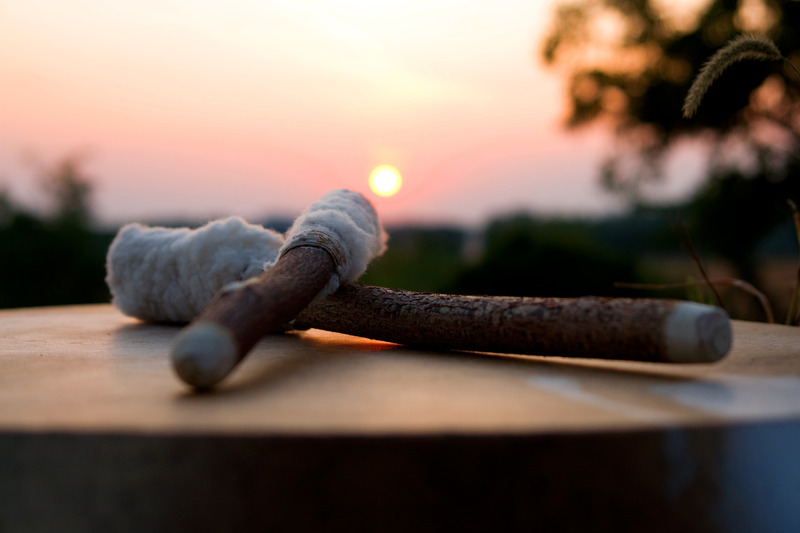
Whether we call them shamanic journeys, imaginal journeys, ecstatic journeys, or something else, humans across time and place have known how to travel to, entering and exiting, otherworldly realms, or unseen worlds. This is done in order to gain access to a wide variety of information, ask for spiritual help and support, and heal themselves, their families and communities. These unseen realms have been referred to by different names across the globe, such as “Other World” in Celtic Shamanism and the “Dreamtime” in Australian Aboriginal tradition (Ingerman, 2004, 2008). These ‘other’ locales can be divided into three major territories: Lower, Middle, and Upper Worlds. Each ‘world’ has something different to reveal to us or teach us. The ‘laws’ we have come to know and expect, do not apply any longer. The community-appointed shaman is considered an expert in navigating these realms. Diverse communities across the world have used various means to assist the shaman in altering consciousness in order to begin the journey. Most commonly repetitious, monotonous sounds, such as those created by a rattle or drum, or chanting, are used.

One can experience a shamanic journey without being appointed shaman, and many do, myself included. As one who uses hypnosis and various types of meditation and breathwork for my own benefit (and offers these services to my clients), it is clear that there are similarities and differences among these trance-like ‘altered states.’ An ability to concentrate is key! Learning the skills to enter a shamanic state of consciousness with intent and purpose, and return to the ordinary state of consciousness can be taught by experienced practitioners and skills can be honed by dedicated students. After all, these are natural conditions. That being said, the worlds entered through a shamanic state of consciousness are not playgrounds and there is a lot to learn before jumping onboard.

Restoring wholeness, coming into balance and harmony with the universe, as well as our full creative potential can be supported through shamanic journeying, as the practice supports us moving forward in our own soul’s journey (Ingerman, 1991).

If this topic interests you, and you would like to learn more, I recommend reading the books written by Michael Harner, Holger Kalweit, Sandra Ingerman, and Robert Moss, for starters. If you want additional references and resources, contact me.

As we approach Samhain, Dia de Los Muertos, All Saint’s Day and All Soul’s Day, I wish peace and harmony to you and to all of your family members and ancestors, whether embodied or otherwise.

~Dr. Kim